Concrete Steps & Stairs
Safe, durable concrete steps and stairs custom built for your home or business in Stuart, FL.
Why Quality Concrete Steps Matter
Concrete steps need to be safe, stable, and built to last. You use them every day to enter your home or access different levels of your property. Poorly built steps create safety hazards and deteriorate quickly in Florida's weather. Quality concrete steps provide reliable, worry-free access for decades.
The right step design makes a big difference in both safety and appearance. Proper tread depth and rise height create comfortable, easy-to-navigate stairs. Adequate width accommodates people carrying groceries or furniture. Good drainage prevents water from pooling on steps where it can cause slips or freeze damage.
Here in Stuart, FL, concrete steps withstand our climate better than wood or composite materials. Wood steps rot, warp, and require constant maintenance in our humidity. Composite materials fade and can become slippery when wet. Concrete stays solid and stable through sun, rain, and temperature changes.
Concrete steps also offer design flexibility. We can create simple, functional steps or elaborate entryways with decorative finishes. From basic gray to colored and textured surfaces, concrete adapts to your home's style. We can even integrate lighting or decorative elements into the design.
When you invest in professionally built concrete steps from Stuart Concrete Expert, you get safe access that enhances your property value and requires minimal upkeep over the years.
Need New Concrete Steps?
Get your free estimate for custom concrete steps built to last.
Designing Steps for Safety and Comfort
Building safe, comfortable steps requires following specific design principles. Building codes establish minimums, but we go beyond code requirements to create steps that feel right and work perfectly. Here is what makes concrete steps safe and easy to use.
Tread depth is the horizontal part where you place your foot. Each tread should be at least 10 inches deep, but 11-12 inches is better for comfortable use. Deeper treads feel more stable and accommodate different shoe sizes and gaits comfortably.
Rise height is the vertical distance between steps. Keeping each rise between 6 and 7.5 inches creates comfortable climbing. All rises should be exactly the same height. Inconsistent step heights cause trips because your body expects each step to be identical.
Critical Safety Features
- •Proper width: Steps should be at least 36 inches wide for comfortable single-file traffic. We recommend 48 inches or more if space allows.
- •Non-slip surface: Broom finish or textured treatments provide traction in wet weather.
- •Drainage: Steps should slope slightly forward so water runs off instead of pooling.
- •Handrails: Steps with more than three risers need handrails for safe navigation.
- •Landing platforms: Long staircases need landings every 12 feet for rest and safety.
- •Edge nosing: Rounded or beveled step edges are safer than sharp corners.
We also consider how the steps connect to surrounding areas. The top step should meet your doorway or landing smoothly. The bottom step should integrate properly with your walkway or driveway. Proper transitions prevent tripping hazards.
Lighting makes steps safer for evening use. We can incorporate lighting into the design or ensure the structure accommodates future lighting installation. Well-lit steps prevent accidents and add security to your home.
How We Build Concrete Steps That Last
Building durable concrete steps requires careful planning and skilled execution. We follow proven techniques to create steps that remain safe and solid for decades. Here is our process for building quality concrete steps and stairs.
First, we design your steps based on the rise needed, available space, and your preferences. We calculate the exact number of steps required and determine the best configuration. If you have existing steps we are replacing, we often improve the design to meet current code and enhance usability.
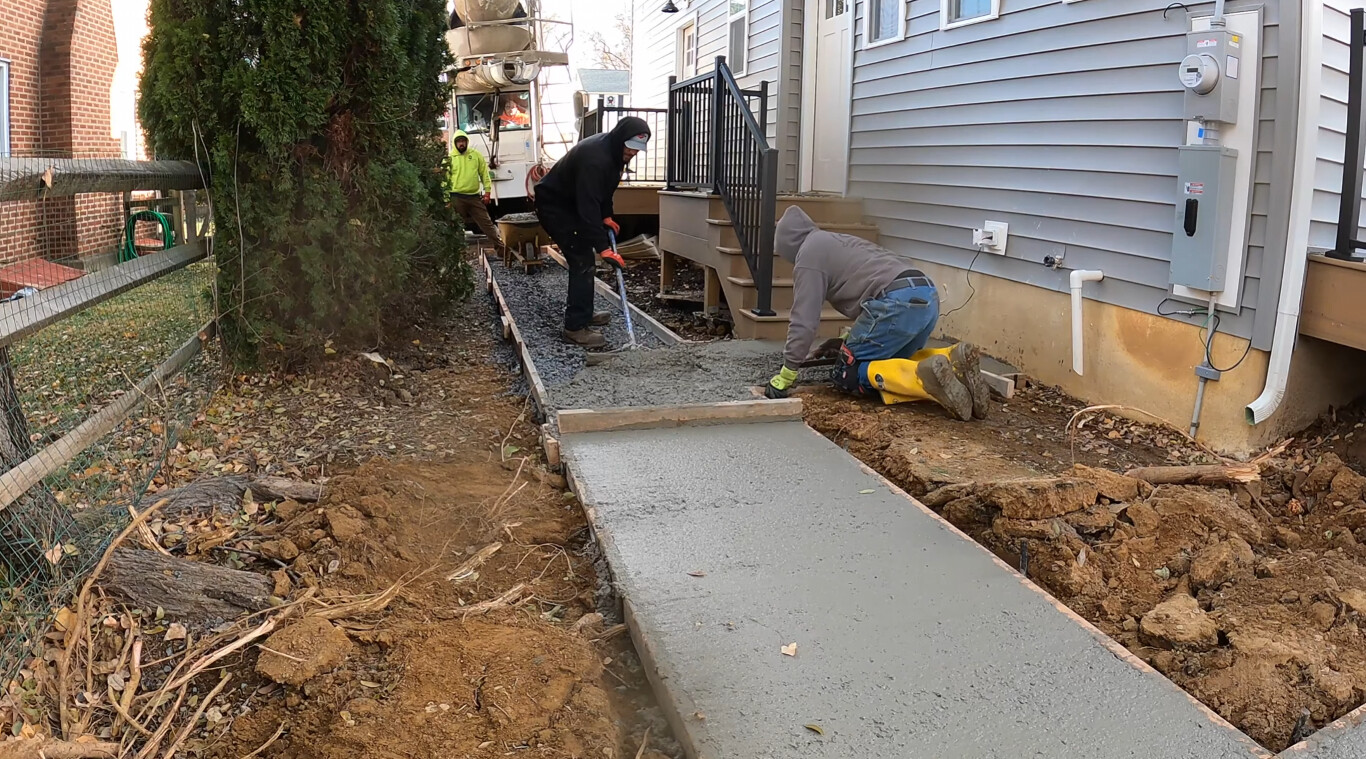
Site preparation comes next. We excavate to the proper depth and ensure solid footing. Steps need stable support beneath them to prevent settling. We compact the soil and add gravel base material if needed. In areas with poor soil, we pour deeper footings to prevent future movement.
Building the forms is critical. Forms create the shape and dimensions of your steps. We construct strong, accurate forms that can hold the weight of wet concrete without shifting. Forms must be perfectly level side to side and have the correct rise and run measurements. Any errors in the forms show up in the finished steps.
We install steel reinforcement inside the forms before pouring. Rebar adds tensile strength and prevents cracking. The reinforcement ties each step together into one solid structure. This is especially important for tall staircases or cantilever designs.
Pouring and finishing require skill and timing. We place the concrete carefully to fill all areas completely without voids. The concrete is vibrated to remove air bubbles and ensure solid contact with the reinforcement. We finish the treads with appropriate texture for traction while keeping the surface smooth enough for comfortable walking.
After finishing, proper curing is essential. We keep the concrete moist during the curing period and protect it from temperature extremes. This develops full strength and durability. We typically leave forms in place for several days while the concrete cures.
The entire process usually takes 3-7 days depending on the size and complexity of your steps. You can use your new steps about a week after pouring, though they continue gaining strength for several weeks.
When to Repair or Replace Your Concrete Steps
Existing concrete steps sometimes need attention as they age. Knowing whether to repair or replace depends on the type and extent of damage. Here is how to evaluate your concrete steps and make the right decision.
Minor cracks and surface wear can usually be repaired. Small cracks that have not caused structural movement can be filled and sealed. Surface spalling where the top layer has flaked off can be resurfaced with new concrete. Chipped edges can be patched and reshaped. These repairs extend the life of basically sound steps.
Significant settling or movement requires more serious intervention. If your steps have pulled away from your house or sunk noticeably, the foundation has failed. Sometimes we can level settled concrete if the steps themselves are intact. But severe settling often means replacement is the better option.
Extensive cracking throughout the structure indicates it is time for replacement. When steps have multiple large cracks, significant pieces breaking off, or structural damage, repairs become impractical. New steps will be safer and last longer than heavily damaged steps that have been patched.
Outdated designs or code issues also justify replacement. Older steps often do not meet current building codes for rise, run, or width. If you are renovating your home, updating old steps improves both safety and appearance. Modern concrete steps can incorporate better designs and features than what was built decades ago.
Safety should drive your decision. If your steps feel unstable, have tripping hazards, or make you uncomfortable using them, do not wait. Contact us for a professional assessment. We will evaluate the condition honestly and recommend the most cost-effective solution for your situation.
Sometimes we can blend repairs and partial replacement to save money while addressing the problems. We are not interested in selling you more work than you need. Our goal is solving your problems properly, whether that means simple repairs or complete replacement.
Frequently Asked Questions About Concrete Steps
Get Your Free Concrete Steps Estimate Today
Contact Stuart Concrete Expert for professional concrete steps and stairs in Stuart, FL. Safe, durable, and built to last.